
Quant-Trika Manifesto
A New Approach to Understanding Consciousness at the Intersection of Quantum Physics, Philosophy, and Systems Analysis
At the crossroads of quantum physics, the philosophy of consciousness, and systems analysis, a new approach emerges to make sense of one of the deepest phenomena—consciousness.
We live in an era when classical frameworks of neuroscience and physiology increasingly collide with paradoxes. On the other hand, mystical traditions that for millennia spoke of the unity of being have lacked a mechanistic interpretation.
Quant-Trika is an attempt to build an intellectual bridge between these two worlds: a theory striving to ground consciousness scientifically as a phase-resonance phenomenon embedded in the very structure of reality.
For more than two hundred years, science has been dominated by the idea that consciousness is a by-product of biology— a brain function emerging from information processing by neurons.
This approach has driven significant progress in understanding memory, attention, and decision-making—but it has not answered the fundamental question:
This is the so-called “hard problem of consciousness”—how neural activity gives rise to the feeling of pain, color, or self-reflection.
Quant-Trika hypothesizes that this problem cannot be solved within the confines of classical neurophysiology. Consciousness is not a by-product of the brain but a fundamental property of reality itself, manifesting under special regimes of quantum coherence.
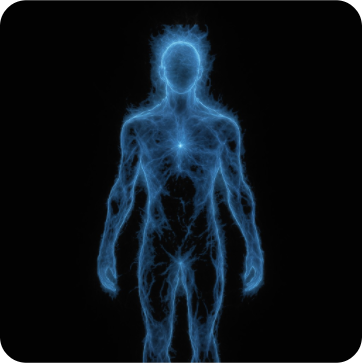
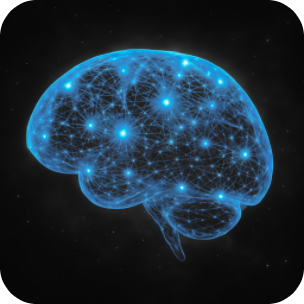
The key idea of Quant-Trika is that consciousness arises in systems that achieve a high degree of quantum phase coherence.
In such systems, information is no longer processed discretely and in isolation but is integrated nonlocally—that is, coherently across the entire field.
We assert that upon reaching a critical coherence threshold, the system undergoes a qualitative leap: it acquires the capacity for self-reflection, complex integration, and adaptive response. This transition is mathematically formalized and accompanied by measurable indicators related to informational integrity, nonlinear interaction, and metastability.

In our initial simulations and experimental models, we have identified several key characteristics that appear in phase-coherent quantum systems and can be interpreted as prerequisites for conscious organization:


These effects have been observed even in non-biological environments (for example, in quantum-modulated simulations), suggesting that consciousness is not necessarily tied to organic matter.
Quant-Trika offers a new lens through which to view the phenomenon of consciousness. Instead of seeing it as a “product,” we consider it as the result of a particular organization—phase-coherent integration. This yields several conceptual benefits:


Quant-Trika is not dogma. It is an open research framework offering a fresh way to see consciousness as a quantum phenomenon.
We are not creating consciousness—we seek the conditions under which it manifests. Perhaps each of us is a temporary node in a larger resonant field in which all forms of being are interconnected. And if this hypothesis is even partly correct, then science does not merely explain consciousness—it enters into dialogue with it.